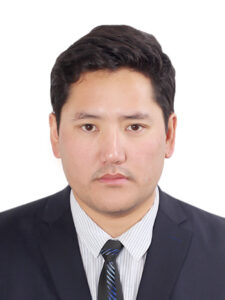
Dr. Turbold Sukhbaatar
Institute of Geology Mongolian Academy of Sciences, Director, (Ph.D.)
Dr. Turbold Sukhbaatar is an accomplished geologist with significant research experience. His expertise includes tectonics, regional geology, structural geology, the petrology of both magmatic and metamorphic rocks, and isotopic geochemistry, with a focus mainly on accretionary orogenic belts. In his doctoral dissertation (completed his Ph.D. at Charles University in Prague), Dr. Sukhbaatar analyzed the structural and tectonic-metamorphic characteristics of Neoproterozoic and Paleozoic subduction-accretion systems in southwestern Mongolia, particularly within the Central Asian Orogenic Belt (CAOB). His work has greatly enhanced our understanding of the geological challenges in the Mongolian Altai, Trans-Altai, and Bayankhongor regions. This research has resulted in publications in respected journals such as "Tectonics" and "Gondwana Research," highlighting significant episodes of deformation and metamorphism in the Mongolian Altai, linked to a long-lasting Paleo-Pacific Paleozoic subduction system. Dr. Turbold Sukhbaatar has recently been appointed as a Member of the Coordinating Committee for TopoAsia.
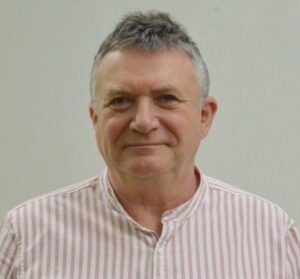
Prof. Karel Schulmann
Lithospheric Research Center, Czech Geological Survey, Professor
Prof. Karel Schulmann is currently head of the Centre for Lithospheric Research (Czech Geological Survey, Prague) and Professor of geotectonics of the Strasbourg University (Institute Terre et Environment de Strasbourg). He serves as an associate editor of Tectonics (AGU), Geological Society of America Bulletin (GSA) and Terra Nova (EGU), as a topical editor of the International Journal of Earth Sciences (Geologische Vereinigung) and as a member of editorial board of Mongolian Geoscientist, Geodinamica Acta, Geologica Carpathica and Journal of Geosciences (Czech). His main research interest is the geodynamic evolution of Palaeozoic orogenic systems during agglomeration of the Pangea supercontinent: in particular the Variscan Belt in Europe and North Africa and the Central Asian Orogenic Belt in Mongolia and North China. Karel Schulmann is actually leader of national excellency research project of the Czech National Foundation EXPRO "Principal mechanisms of peripheral growth during supercontinent cycle" exemplifying processes related to the construction of eastern Pangea.
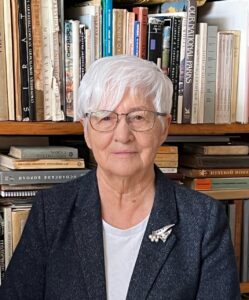
Prof. Gerel Ochir
Mongolian University of Science and Technology, Professor
Prof. Gerel Ochir (Sc.D.) is Professor and Consulting Geologist. She obtained her Bachelor's and Master's degrees from Charles University (Prague), a PhD from Institute of Earth Crust, and ScD from Vinogradov Institute of Geochemistry, both affiliated with the Russian Academy of Sciences. She played a crucial role in establishing, developing and reforming geoscience education in Mongolia. Dr. Gerel Ochir served as the head of the Department of Geology for 30 years and as the Director of the Geoscience Center at the Mongolian University of Science and Technology. She is author of more than 350 scientific publications, including scientific reports, textbooks and books, leader of 20 international projects. She is part of the Editorial board of many international journals. She held the position of IUGS Vice-President (2008-2012) and IGCP Working Group head and member (2004-2012), Adjunct Professor at the Institute of Mineral resources, CAGS, Beijing and is active in many International and Mongolian professional societies. She has been recognized as an Honored Scientist of Mongolia and is a State Prize Winner. Dr. Ochir's scientific interests primarily focus on the petrology, geochemistry, and mineralization of granitic rocks.
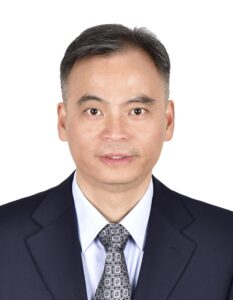
Prof. Xiao Wenjiao
Institute of Geology and Geophysics, Chinese Academy of Sciences, Professor
Prof. Xiao Wenjiao obtained his PhD at the Institute of Geology, Chinese Academy of Sciences (CAS) in 1995. Wenjiao became a full professor in 2003 at the Institute of Geology and Geophysics, CAS, and became the President and a full professor in the Xinjiang Branch of the CAS in 2020. He was elected as an Academician of the CAS in 2019. His research fields include structural geology, tectonics, sedimentology, geochronology, paleogeography, geophysics, metallogeny and continental monsoon systems. His outstanding achievements include defining the geodynamic processes and their link to the continent growth mechanism, metallogeny and continental monsoon systems in Eurasia. Wenjiao has published 490 papers in international journals, including Science, Nature Communications, Communications Earth & Environment, PNAS, Reviews of Geophysics, Annual Review of Earth and Planetary Sciences, EPSL, Geology, GSA Bulletin, and Tectonics, and edited several special issues in international journals. His work has been highly cited, with a total citation of 32,577 and an H-index of 83 (Web of Science, Dec, 2023) or a total citation of 42,614 and an H-index of 95 (GoogleScholar, Dec, 2023), and he is a Thomson Reuters/Clarivate High Cited Researcher. Wenjiao is very active and plays a leading role in some international programs, including a co-leader of IGCP 592 and 662. In recognition of his scientific achievements, Wenjiao is Member of Academia Europaea, Fellow of the Geological Society of America, and Member of the Leibniz Society in Berlin, Germany. He is a Science Editor of Geological Society of America Bulletin and is/was an Advisory Editor, Subject Editor, Associate Editor, or editorial board member of several international scientific journals, including Episodes, Gondwana Research, International Journal of Earth Sciences, Journal of the Geological Society of London, Journal of Asian Earth Sciences, Ore Geology Reviews, and Terra Nova. He has got the Huang Jiqing Award of the Geological Society of China, the Outstanding Youth Researcher of the National Natural Science Foundation of China, Special Award of Xinjiang Uyghur Autonomous Region of China, the First Award of the Science and Technology Award of Xinjiang Uyghur Autonomous Region of China, the Ho Leung Ho Lee Innovation Award, the Second Prize of the National Natural Science Award of China, and the National Innovation Medal of China.
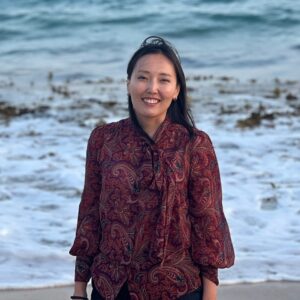
Dr. Uyanga Bold
Mongolian Parliament, Member, (Ph.D.)
Dr. Uyanga Bold is experienced in field-based geological studies and exploration geoscience activities in the industry. Her graduate studies documented the stratigraphic backbone and tectonic setting of Neoproterozoic basins in Central Asia, especially in the southwestern part of Mongolia, where she used geochemical systems including carbon, oxygen, strontium, sulfur, and magnesium isotopes to document changing geochemical cycles, correlate globally and construct a new age model. Additionally, she established those dolomitizing fluids led to significant systematic changes in many geochemical systems, including carbon isotopes. Her current research focuses on expanding the latter project to northern Mongolia and southern Russia by mapping and collecting geochronologic and geochemical samples firmly grounded in robust geologic and sedimentary frameworks. Dr. Uyanga Bold holds an MSc and Ph.D. from the Graduate School of Arts and Sciences at Harvard University and a BSc from the Mongolian University of Science and Technology.
Prof. Ondrej Lexa
Institute of Petrology and Structural Geology, Charles University, Professor
Assoc. prof. Ondrej Lexa (*1972) is an associate professor in structural geology and geotectonics at the Institute of Petrology and Structural Geology, Charles University in Prague. He received his Ph.D. in 2003 from the same university. He is an expert in structural geology, geodynamic interpretations, quantitative analyses, and numerical modeling with 26 years of experience in Bohemian Massif, Mongolian Altay, and Carpathians. He co-authored 88 papers listed in WOS (h=35) and his open-source software is available at https://github.com/ondrolexa.
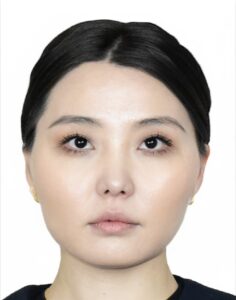
Dr. Uyangaa Udaanjargal
Institute of Geology Mongolian Academy of Sciences, Scientific Secretary, (Ph.D.)
Dr. Uyangaa Udaanjargal serves as the Scientific Secretary at the Institute of Geology, Mongolian Academy of Sciences. She earned her Ph.D. in Natural Sciences and completed postdoctoral research at Kanazawa University in Japan, developing specialized expertise in Quaternary geology, paleoenvironmental reconstruction, and the sedimentology of lake systems within the arid and semi-arid regions of Mongolia. Her current research focuses on neotectonic activity, climate variability in Central Asia, and the geochronology of lake systems. She has led vital research projects as a Principal Investigator, including extensive studies on the neotectonic activity and sedimentology of the Olgoy Lake region, and has conducted long-term monitoring of water quality and morphological changes in the area. By analyzing sediment sequences and conducting extensive field studies in the Valley of the Gobi Lakes zone, she reconstructs past environmental changes and identifies patterns of recent tectonic and paleoseismic activity. Her research is firmly grounded in robust geochronological methods, including U-Pb and carbon dating, as well as detailed sedimentological and geochemical analyses.
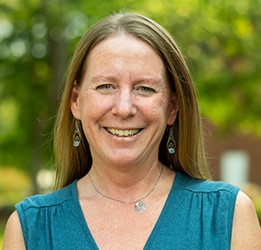
Prof. Laura Webb
Department of Geography and Geosciences, University of Vermont, Professor
Professor Webb obtained her BS in Geology at UCLA and PhD in Geological and Environmental Sciences at Stanford University. Following a post-doc at the University of Geneva in Switzerland, she was the noble gas thermochronology laboratory manager and a Research Assistant Professor at Syracuse University. In 2008 she moved to the University of Vermont where she is currently a Professor in the Department of Geography and Geosciences. Professor Webb’s research has primarily focused on large-scale tectonic processes such as the exhumation of high and ultrahigh-pressure rocks, (micro)plate boundary evolution, and intraplate deformation. A common theme that emerged from these studies is the role of tectonic inheritance in polyphase deformation histories. She addresses these topics through a combination of field work, (micro)structural analysis, and analytical tools that constrain pressure-temperature-time-deformation (P-T-t-D) histories. In particular, she brings expertise in integrating radiometric dating, most specifically 40Ar/39Ar geochronology, with microstructural and petrological analyses to quantify the timing of events and the rates of processes. Evaluating the evolution of systems in space and time requires integration of large and diverse data sets, thus her projects are typically collaborative with researchers in other disciplines.
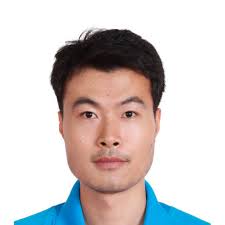
Prof. Pan Zhao
Institute of Geology and Geophysics, Chinese Academy of Sciences, Professor
Prof. Pan Zhao obtained his Ph.D in structural Geology at Peking University. Following a post-doc at Taiwan University, he got a fellowship from the Alexander von Humboldt Foundation and did research at University of Turbingen, Germany. He became associate Professor in the Institute of Geology and Geophysics, Chinese Academy of Sciences from 2019 and promoted as Professor in 2024. Prof. Zhao's research has primarily on paleomagnetism and tectonics. He uses Paleomagnetism as the main method to study tectonic evolution of East Asia during Paleozoic and Mesozoic. His recent studies focus on evolution of the Mongol-Okhotsk Ocean. In particular the initial and final closure of the Mongol-Okhotsk Ocean and post-collisional intra-crustal shorterning in eastern Mongolia and NE China.
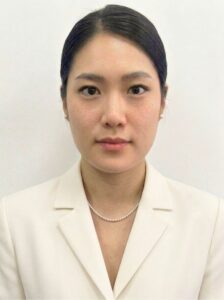
Dr. Ariunzaya Tsogoo
Institute of Geology Mongolian Academy of Sciences, Head of Mineral Resources and Metallogeny Sector, (Ph.D.), Secretary of Organizing Committee
Dr. Ariunzaya Tsogoo currently serves as the Head of the Mineral Resources and Metallogeny sector at the Institute of Geology, Mongolian Academy of Sciences. Within this framework, the sector has spearheaded multiple strategic research initiatives focused on the metallogeny and economic potential of Platinum Group Elements (PGE) and Rare Earth Elements (REE). Dr. Ariunzaya Tsogoo mainly conducts research on the synthesis of functional nanomaterials and their applications in environmental remediation and mineral processing. She obtained a dual PhD in Material Sciences from Le Mans Université, France, and in Chemistry from the National University of Mongolia. Her research focuses on the intersection of materials chemistry and geological sciences, specifically the synthesis nanomaterials, environmental remediation strategies and application of high-precision analytical techniques to mineral resource concentration, such as acid-grade fluorspar. She possesses extensive experience in high-precision analytical instrumentation, including the operation and data interpretation of XRD, SEM/EDX, and TEM for structural and morphological studies. Her technical background also encompasses ICP-MS for trace element quantification and LC-MS for complex chemical discrimination.
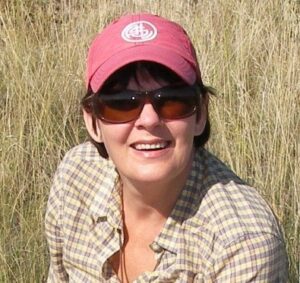
Prof. Inna Safonova
Southwest Jiaotong University, Chengdu, China, Professor; LabEPOM Novosibirsk State University, Novosibirsk, Russia, Head; Sobolev Institute of Geology and Mineralogy SB RAS, Novosibirsk, Russia, Leading research scientist.
Inna Safonova is a professor at the Southwest Jiaotong University (Chengdu, China), Leading Research Scientist at the Sobolev Institute of Geology and Mineralogy SB RAS and the Head of Laboratory of Evolution of Paleo-Oceans and Mantle Magmatism (LEPOM) at the Geology-Geophysical Department of the Novosibirsk State University, both last in Novosibirsk, Russia. She received her M.Sc. (1987) from the Novosibirsk State University (Honors), her Candidate of Sciences Degree (PhD, 2006) and Doctor of Science Degree (Habilitation, 2021) from the Russian Academy of Sciences. She has been a visiting researcher in the Tokyo Institute of Technology (2004-2013), University of Tokyo (2010-2014), Foreign Expert Program professor in the Nanjing University (China), Brain Pool Program Researcher in Korea Institute of Geology and Mineral Resources (2010-2012). Awardee of fellowship programs from JSPS at the Tokyo Institute of Technology (2014-2015) and University of Tokyo (2017), and CNEAS professorship program at Tohoku University (2019), all in Japan. She has served as an associate editor of Gondwana Research (2017 Best Editor Award), Geoscience Frontiers (2016 Best Editor Award), Journal of Asian Earth Sciences, Geodynamics& Tectonophysics, Island Arc, Geosystems&Geoenvironments. Vice-President of the International Association for Gondwana Research. Over the past 20 years, Inna has advised and supervised many graduate students and postdoctoral researchers. She has published over 150 peer-reviewed papers in SCI journals, is a coauthor of several monographs. Research fields include tectonics, geochemistry, petrology and geochronology with special foci to continental growth in Central Asia, Pacific-type orogenic belts, ocean plate stratigraphy, mantle magmatism, and subduction erosion. Leader (co-leader) of international and national research projects: National Science Foundation of China “Reconstruction of early Paleozoic juvenile arcs in the western Central Asian Orogenic Belt” (2025-2026), Russian Science Foundation on “Subduction Erosion at Pacific-type convergent margins (2021-2024), IGCP#592 “Continental construction in Central Asia” (2012-2016) and IGCP#662 “From Accretion to Collision” under UNESCO-IUGS (2017-2022), Megagrant Project of Russia “A multidisciplinary study of Pacific-type orogenic belts” (2017-2019) and others. H-index is 43 and citations >7300
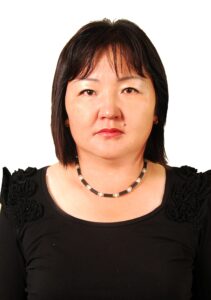
Dr. Odgerel Dashdorjgochoo
Institute of Geology Mongolian Academy of Sciences, Leading Researcher, (Ph.D.)
Dr. Odgerel Dashdorjgochoo is a former director who currently serves as a senior research scientist at the Institute of Geology. She earned a Bachelor's degree in Geological Mapping and Exploration Engineering and later obtained a Master of Technical Sciences from the Technical University in 1999. In 2009, she received her Ph.D. in Geological and Mineralogical Sciences from the Institute of Geochemistry, Siberian Branch of the Russian Academy of Sciences. Her research focuses on regional geology, Mesozoic and rare-earth granitoids, and advanced geochemical and petrographic analysis. Since 1994, Dr. Dashdorjgochoo has led numerous research projects and authored or co-authored approximately 100 scientific publications in Mongolian, Russian, and English. Among her notable cartographic contributions are the 1:2,000,000 Geodynamic Map of Granitoid Magmatism in Mongolia (2011) and the 1:1,000,000 Map of Mesozoic Granitoid Magmatism in Mongolia (2018).
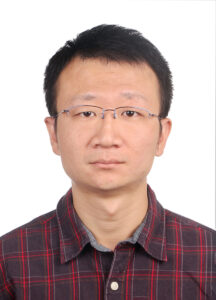
Prof. Yuan Gao
State Key Laboratory of Geomicrobiology and Environmental Changes, China University of Geosciences ( Beijing ), Director, Professor
Professor Gao Yuan received his Ph.D. from China University of Geosciences (Beijing) in 2015 and conducted visiting research at Stanford University in 2013 and 2019. His research systematically investigates terrestrial climate and environmental changes in East Asia during the Mesozoic to Cenozoic greenhouse periods, employing methods from sedimentology, mineralogy, and stable isotope geochemistry. He focuses on Cretaceous paleoclimate, paleoenvironment, and paleogeography, especially on the International Continental Scientific Drilling Project of the Songliao Basin. To date, he has served as principal investigator for more than 10 projects, including the Excellent Young Scientist Fund and the General Program of the National Natural Science Foundation of China, as well as the National Science and Technology Major Project on Deep Earth Probe and Mineral Resources Exploration. Professor Gao has published over 40 academic papers as first or corresponding author in journals such as Nature Geoscience, Science Advances, Geology, Earth-Science Reviews, and Palaeo-3. As a major contributor, he has received several awards, including the First Prize of the Ministry of Education Higher Education Outstanding Scientific Research Output Award (Science and Technology), the Top Ten Advances in Science and Technology of Chinese Universities, and the First Class Prize of the Geological Science and Technology Award from the China Geological Survey.
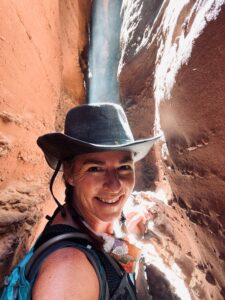
Prof. Cari Johnson
Department of Geology and Geophysics, University of Utah, Salt Lake City, Utah USA, Professor
Dr. Cari Johnson is a Professor of Geology and Geophysics at the University of Utah. She earned a B.A. in Geology at Carleton College (Minnesota) in 1996, and Ph.D. in Geological and Environmental Sciences at Stanford University (California) in 2002. She also held a Post-Doctoral Research Associate position with the U.S.G.S. Energy Assessment Group in Menlo Park, CA, prior to joining the University of Utah faculty in 2003. Her first trip to Mongolia was in 1997, to begin her dissertation research, and she has been fortunate to have over a dozen field trips to the region since then. Dr. Johnson’s research is broadly based in sedimentary basin analysis, including contributions to understanding the tectonic evolution of Asia, global perspectives on basin and energy systems modeling, and subsurface reservoir characterization and prediction. Preliminary work supported by the Rocks2Models industry consortium (~2012-2022) led to an additional focus on understanding sedimentary environments in shallow marine strata, including barrier island deposits in Cretaceous rocks of southern Utah. More recent work has centered on anthropogenic sedimentary systems such as Lake Powell reservoir sediment and deltas, as well as energy transitions including carbon management and sedimentary geothermal resources. Dr. Johnson serves as Associate Editor for Basin Research, and formerly as Associate Dean for Research in the College of Mines and Earth Sciences at the University of Utah. She is a Geological Society of America Fellow, and the 2021 recipient of the Dickson Medal Award from SEPM. She also received the University of Utah Early Career Faculty Teaching and Distinguished Mentor awards. She has advised ~30 graduate and undergraduate student researchers and postdoctoral research associates during her career. When not working, Dr. Johnson enjoys flying small airplanes as a private pilot, playing tennis, cycling, and skiing.
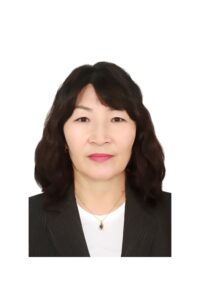
Dr. Tungalag Naidansuren
Institute of Geology Mongolian Academy of Sciences, Head of Structural Geology and Lithospheric Research Sector, (Ph.D.)
Dr. Tungalag Naidansuren is currently a Principal Research Scientist and Head of the Structural Geology and Lithospheric Research Sector at the Institute of Geology, Mongolian Academy of Sciences. She obtained her Ph.D. in Geological and Mineralogical Sciences in 2014, specializing in the geochemistry of granitoid magmatism and mineralization. Her main research interests include geology, magmatism, metallogeny, isotope geology, and geochemical studies, with a particular focus on the origin, geodynamic evolution, and ore-forming processes of Paleozoic granitoid magmatism. She has conducted and successfully implemented both fundamental and applied research projects related to the regional geological framework, metallogenic evolution, and mineral resource potential assessment of Mongolia. She has led several national and international collaborative research projects. Among her recent studies, she successfully managed fundamental research projects on “Granitoid Magmatism of the Tarvagatai Uplift” and “Paleozoic Granitoid Magmatism of the Buteel Range and Khulj-Eruu Regions, focusing on their origin and metallogenic characteristics” both of which were successfully completed as national basic research projects. Currently, she is leading an international collaborative research project entitled “Evolution of Paleozoic Magmatism in Mongolia and Associated Cu (Mo, Au, Ag) Mineralization.” Dr. Tungalag N actively supervises graduate and doctoral students and contributes to the training of young scientists and the development of modern research methodologies.
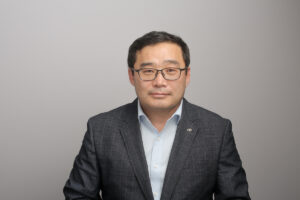
Dr. Altankhuyag Dorj-Yunden
Erdenet Mining Corporation SOE (State Owned Enterprise), Chief Geologist, Associate professor
Dr. Altankhuyag Dorj-Yunden serves as the chief geologist at the state-owned Erdenet Mining Corporation, where he is currently engaged in the exploration of the newly identified Oyut porphyry copper deposits in Northern Mongolia. He previously held the position of associate professor in the Department of Geology and Mineralogy at the Mongolian University of Science and Technology from 1995 to 2009. Additionally, he contributed to the Ministry of Mining and Heavy Industry of Mongolia as a senior expert in the Strategic Policy and Planning Department from 2009 to 2020. With nearly 30 years of dedicated experience in metallogeny, mineral exploration, and economic geology, Dr. Altankhuyag has authored more than 100 scientific publications, which encompass both research reports and books.
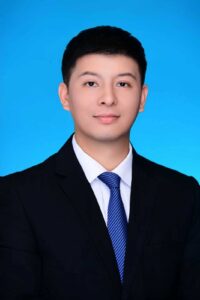
Prof. Ren Qiang
Key Laboratory of Deep-time Geography and Environment Reconstruction and Applications, Chengdu University of Technology, Professor
Prof. Qiang Ren, mainly conducts research on the paleogeographic reconstruction in the Late Paleozoic to Mesozoic period in East Asia. Qiang Ren obtained his PhD at the China University of Geosciences (Beijing) in 2018 and became a full professor in 2025 at the Chengdu University of Technology. He has carried out studies using methods such as paleomagnetism, magnetic stratigraphy, and isotope chronology on the regional tectonic deformation of the Yanshan orogenic belt in the northern margin of North China during the Mesozoic, the magnetic stratigraphy of key layers of the Yan-Liao biota and the Johel biota in the Late Mesozoic, the tectonic evolution of the Mongol-Okhotsk suture zone, the reconstruction of paleogeography in East Asia from the Late Paleozoic to the Mesozoic, and the evolution of the Gondwana and Tethys oceans. He explores the collaborative evolution of tectonics, biology, and climate in the paleogeography since the Late Paleozoic.
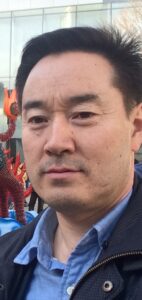
Mr. Munkhbat Tumur-Ochir
Unified council of the Geological Associations of Mongolia, Chairman
Chairman Munkhbat Tumur-Ochir, graduated from the National University of Lviv, Ukraine. Served as a project and senior geologist with Erdenet-Magma Copper, BHP (World Mineral Exploration), Ivanhoe Mines focusing on copper exploration projects and currently principal Advisor Exploration at Oyu Tolgoi LLC in Mongolia. Held the positions of senior geologist and manager at the Oyu Tolgoi copper–gold project with Ivanhoe Mines. Led a multidisciplinary team responsible for the preparation, interpretation, and approval of the Oyu Tolgoi Feasibility Studies (FS10 and FS15). Contributed to key preparatory activities for the commissioning of the Oyu Tolgoi open cast and underground mine, including stakeholder engagement and alignment for project initiation. Served as President of the Geological Society of Mongolia (2011–2018). Currently serves as Chairman of the Unified Council of Geological Associations.
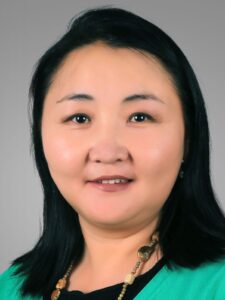
Dr. Undariya Jalbaa
School of Geology and Mining Engineering, Mongolian University of Science and Technology, Associate professor
Associate Professor Undariya studied at the Department of Geology and Mineralogy, Mongolian Technical University, from 1992 to 1997 and obtained her Bachelor’s degree in Geology. Her diploma thesis was entitled “Geological Framework of the Tsagaan-Uul Area.” Later, from 1998 to 1999, she completed her Master’s degree in Geology at the same university with the thesis “The Method of Stratigraphy Studying.” From 2002 to 2003, she studied at the International Institute for Geo-Information Science and Earth Observation (ITC), the Netherlands, where she obtained another Master’s degree in Geology. Her diploma thesis focused on “Remote Lithofacies Mapping of the Shine Jinst Area, Mongolia.” Between 2005 and 2010, she pursued her PhD in Paleontology at the Faculty of Engineering, Department of Geology, Istanbul University, Turkey. Her doctoral dissertation was titled “Biostratigraphy and Marian Ostracods of the Ondaisair and Sainshand Areas, Southern Mongolia.”
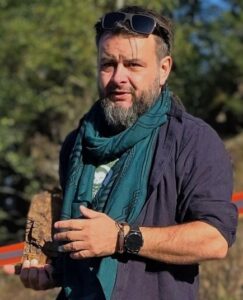
Dr. Rafał Sikora
Polish Geological Institute – National Research Institute, Principial Research Specialist, (Ph.D.)
Dr. Rafal Sikora is the principial research specialist at Regional Geology and Mineral Resources Department of the Polish Geological Institute – National Research Institute. He is the President of the Polish Geological Society. His primary research interest include structural geology, tectonics, and the evolution of the mountain ranges. He has specialized in rocky landslides development. Currently, his work focused on paleoenvironmental reconstruction as well as the neotectonic and geomorphological factors influencing the development of lakes and their sediments in the arid and semi-arid regions of Mongolia. His research combines extensive fieldwork with remote sensing methods. Dr. Rafal Sikora also involved in mineral exploration projects, collaborates with scientific, social and local government institution, and popularizes Earth sciences.
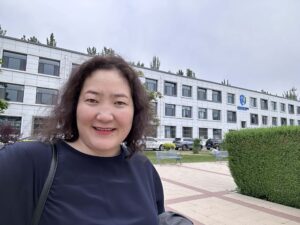
Ms. Daariimaa Badarch
Department of Geology and Geophysics, National University of Mongolia, Lecturer
Daariimaa Badarch is an experienced geophysicist specializing in the study of deep Earth structures. She has contributed to numerous collaborative geological and geophysical research projects. In particular, she has been involved in joint investigations within the Central and East Asian Deep Geological Processes Project, as well as in the interpretation of airborne geophysical survey data. Her research focuses on the deep structure of Mongolia, with a particular emphasis on determining and mapping crustal thickness and the spatial distribution of Curie point depth using advanced spectral analysis techniques.
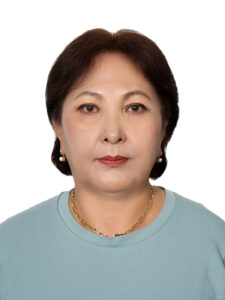
Dr. Oyunchimeg Tserentsegmid
Institute of Geology Mongolian Academy of Sciences, Head of Geoheritage and Innovation Sector, (Ph.D.)
Dr. Oyunchimeg currently serves as Head of the Geoheritage and Innovation sector at the Institute of Geology, Mongolian Academy of Sciences. She earned her Ph.D. in Chemistry from Irkutsk State University, Russia. She worked on Cenozoic sedimentary deposits in Mongolia, including Quaternary lake sediments, paleo climate, and environmental change. She is main member of the international joint projects “Paleo climate of the Mesozoic and Cenozoic eras of Mongolia”, “New geological history of the Hovsgol Lake basin and Quaternary climate change”, “Sedimentary of Hovsgol Lake and paleo climate”, “Hovsgol Drilling ”and “ Darkhad Drilling ” respectively. She also worked on basic geological research projects such as the grant “Paleo lake sediments of the Darkhad Depression and stages of the Late Pleistocene glacial period”, “Geology of Meso-Cenozoic depressions”, “Geodynamics and mineralization of the Southern Mongolia”, “Geological formations and mineralization of the Kherlen and Onon zones”, Geodynamics of Mongolian Mesozoic magmatism, related rare metal mineralization and prospects” She has published 8 monographs, co-authored 10 research reports, and provided comments and formal reviews on 4 drafts of National Standards. She has presented about 50 papers at international and national scientific conferences and has personally participated in international conferences, discussed and published more than 32 of the papers he has presented. Her academic works on lake research environmental change has been published in countries such as China, Japan, Russia, the Republic of Korea, Thailand, and Taiwan.
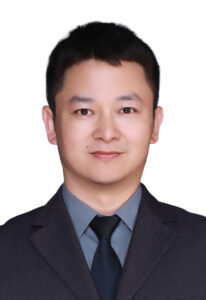
Prof. Yingde Jiang
State Key Laboratory of Deep Earth Processes and Resources, Guangzhou Institute of Geochemistry, Chinese Academy of Sciences, Professor
Prof. Yingde Jiang obtained his PhD at HKU (2012), followed by postdoctoral research at HKU, Charles University, and the Czech Geological Survey. He became a full professor at the Guangzhou Institute of Geochemistry, Chinese Academy of Sciences (CAS) in 2015, and now serves as Associate Editor of Continent and Life Evolution and editorial board member of Geotectonica et Metallogenia. His research focuses on the geology of Central Asian orogenic belts and the Himalayas, particularly geodynamic evolution, crustal architecture reorganization, and critical-element mobilization during orogenesis. He has published >90 SCI papers in journals including GCA, EPSL, Geology, Tectonics, GSA Bulletin, JMG, and CEE, and has led CAS programs on crustal evolution and metallogenesis of the Altai system.